The Best 60-Minute Trackman Practice Session (A Simple Plan That Lowers Scores)

You’ve booked an hour on Trackman. You want to walk out feeling like you actually improved not like you just hit 80 balls into a screen.
This is the exact 60-minute Trackman practice plan I’d recommend for mid and low handicappers who want measurable progress: tighter dispersion, better wedge control, and more fairways hit.
It’s simple on purpose. You’ll use Trackman’s feedback, but you won’t drown in numbers.
Before you start: pick one goal (don’t try to fix everything)
Choose one primary focus for the session:
· Driver accuracy (start line + curve control)
· Iron strike + dispersion (tighten your pattern)
· Wedge distance control (score-lowering shots)
If you try to do all three every time, you’ll do none of them well.
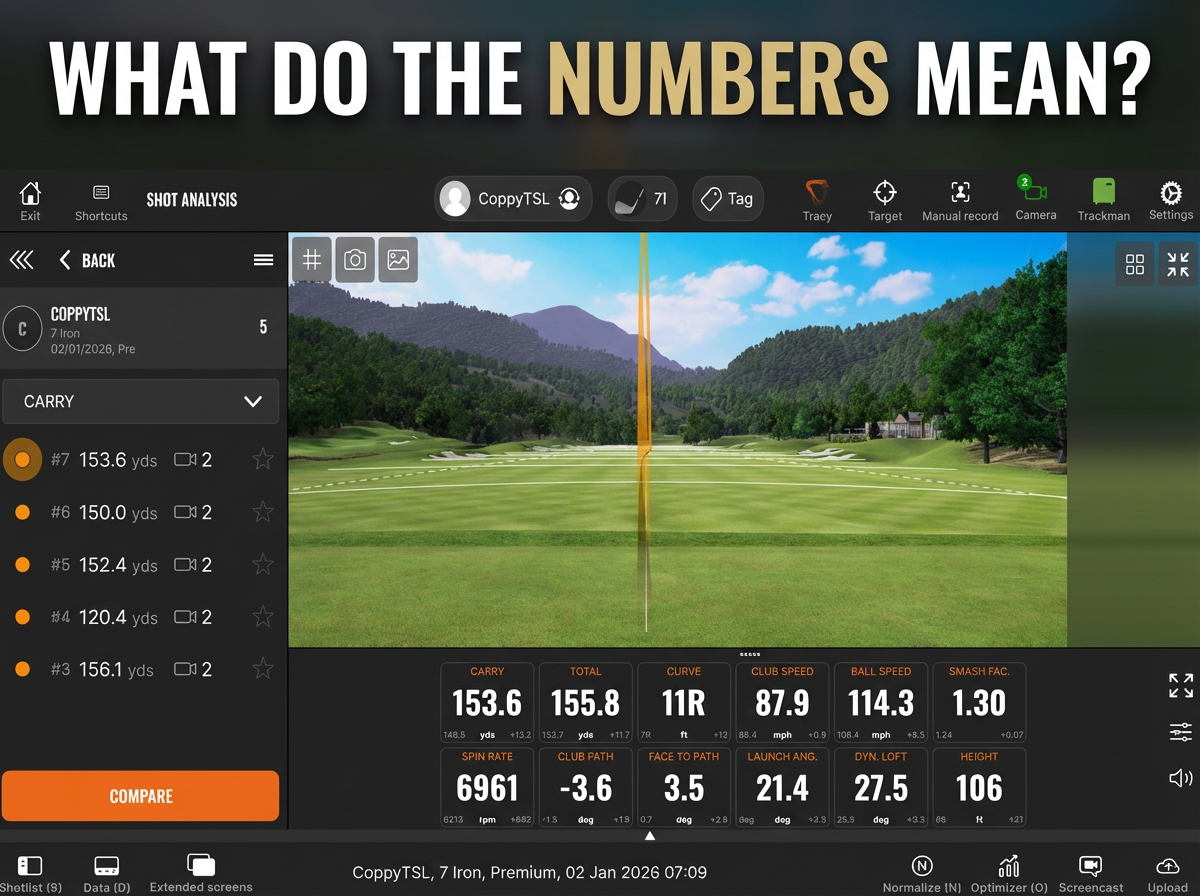
The only 3 Trackman numbers you need today
Trackman can show a lot. For this session, keep it to these:
· Carry distance: your real yardage
· Face angle: where the face points at impact (start line)
· Club path: where the club is travelling (curve)
Optional add-on if you’re working driver: attack angle.
That’s it. Simple = repeatable.
The 60-minute Trackman practice planMinutes 05: Setup + baseline
· Pick a 7-iron.
· Hit 5 balls at a clear target.
· Don’t change anything yet.
Goal: get loose and see your natural pattern.
Minutes 5-15: Warm-up (build strike)
Hit 10 balls with a mid-iron (7i/8i):
· 5 shots at 70% speed
· 5 shots at 85% speed
Focus cue: solid contact + balanced finish.
What you’re looking for on Trackman:
· Carry distance stabilising
· Face/path not wildly changing shot to shot
Minutes 15-30: Skill block (tighten dispersion)
This is where you make your hour count.
Pick one club (7i is fine) and run this:
1. Hit 3 balls to the same target
2. Review the last 3 shots (pattern, not the best one)
3. Make one adjustment (alignment, ball position, tempo)
4. Repeat for 4 rounds (12 balls total)
What “good” looks like:
· A consistent start line
· A predictable curve (even if it’s a small fade/draw)
· A tighter left-to-right spread
If your pattern is a push-fade or pull-draw, don’t panic. The goal is predictable first, then tighter.
Minutes 30-45: Wedge block (the score-lowerer)
Most golfers spend too much time smashing driver and not enough time owning wedge numbers.
Pick one wedge (PW/50�/54�) and do a simple ladder:
· 40 yards: 3 balls
· 60 yards: 3 balls
· 80 yards: 3 balls
Then repeat once (18 balls total).
Trackman focus:
· Carry distance consistency
· Start line control
Pro tip: ignore the one you chunk. Look at the middle 2 of each set of 3. That’s your real pattern.
Minutes 45-58: Performance block (make it feel like the course)
This is the part most people skip and it’s why their range game doesn’t transfer.
Do random practice:
· Choose 9 different targets/distances (mix wedge + iron)
· One ball each
· Full routine every time
Rule: you only get one shot at each target.
This builds decision-making and pressure exactly what you need on the course.
Minutes 58-60: Save your notes (so next session is easier)
Write down:
· Your best-performing club today
· Your biggest miss pattern (e.g., “start right, fade more than expected”)
· One cue that worked
Next time, you start with clarity instead of guessing.
Common mistakes that waste a Trackman hour
· Chasing perfect numbers instead of building a repeatable pattern
· Changing swing thoughts every shot
· Only hitting one club all session
· Never doing random practice
If you want the hour to translate to the course, you need both:
· Skill work (repeat the same shot)
· Performance work (random targets, one ball)
Want a session that actually feels productive?
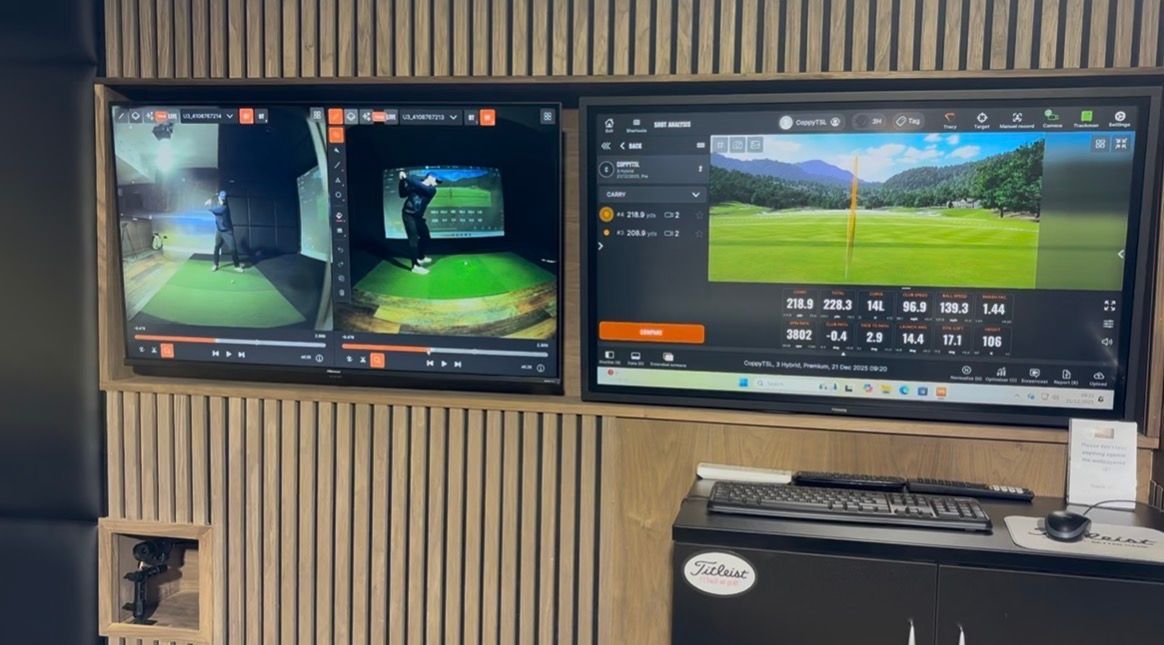
If you want to run this plan with tour-trusted Trackman IO data in a private, exclusive-use bay, book a session at The Swing Lab (Andover).
You’ll leave with:
· Clear yardages
· A tighter shot pattern
· A repeatable practice structure you can use every week